
Zambezi Queen — Complete Safari Lodge Guide: Rates, Rooms & What to Expect
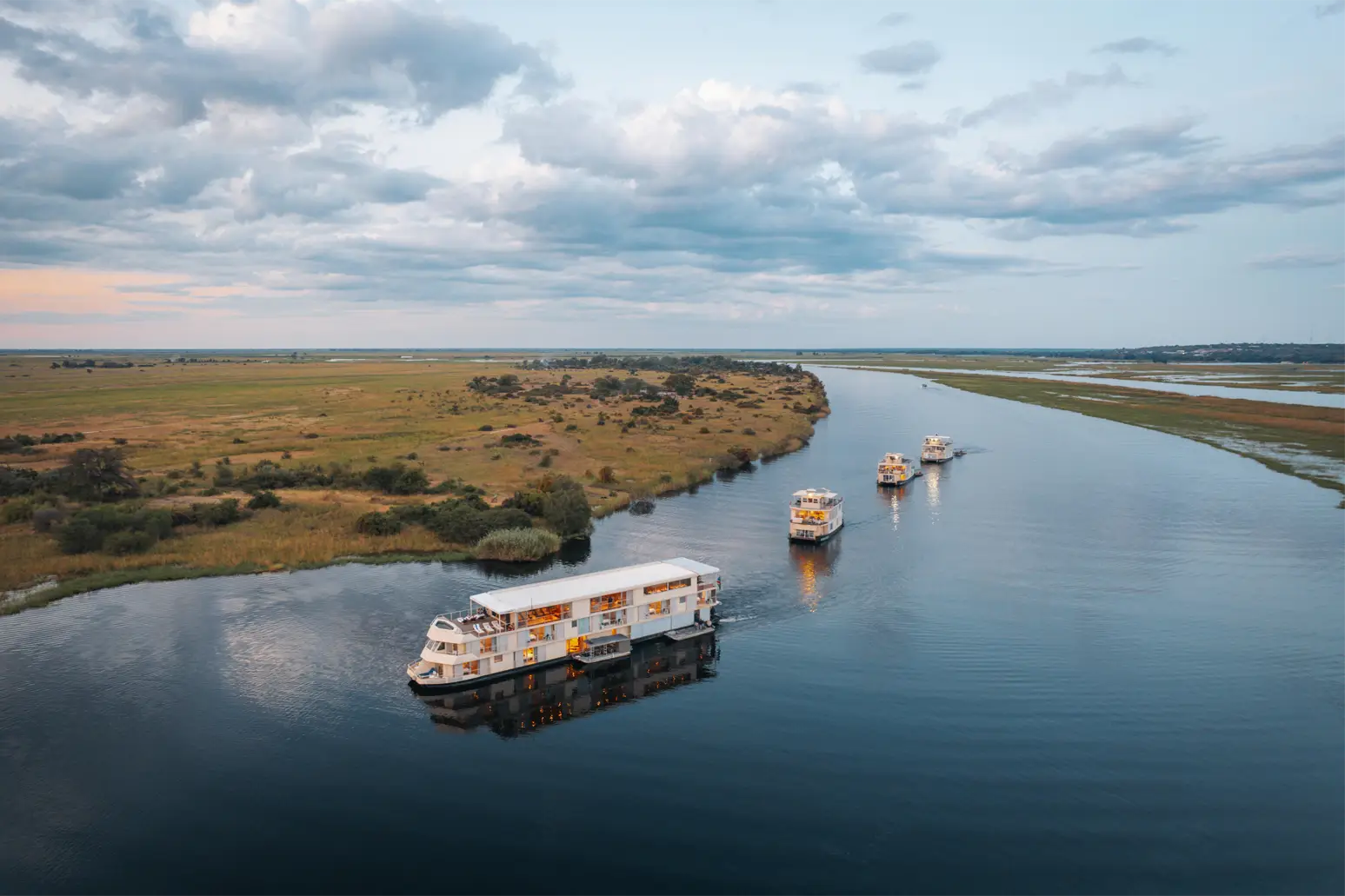
The Zambezi Queen is a 42-metre luxury floating boutique hotel that navigates the Chobe River along the border of Namibia and Botswana, giving passengers uninterrupted views of one of Africa’s most wildlife-rich corridors. Unlike a land-based lodge, your suite moves with the river — positioning you at elephant watering points, hippo pools and predator crossings throughout the day, before anchoring in stillness each evening as the floodplain turns amber. For travellers asking whether the Zambezi Queen is worth it: if you want a wholly different kind of African safari, the short answer is yes.
Key Takeaways
- The Zambezi Queen is a 42-metre luxury floating hotel with 10 suites and 4 luxury suites — all with private balconies overlooking the Chobe River.
- It sails the Chobe River year-round on scheduled departures: 2-night sailings (Mon/Wed in low season) and 3-night sailings (Fridays, year-round).
- Rates start from approximately R15,819 per person per night sharing (suite) and are fully all-inclusive — meals, beverages, guided activities and airport transfers.
- The Chobe River corridor is home to Africa’s largest elephant concentration — dry-season herds of 50,000+ animals converge on the river between May and October.
- A remarkable guest-to-crew ratio of 3:2 ensures genuinely personalised service on board.
- The vessel operates from the Namibian side of the Chobe River — a rare vantage point that most Botswana-based safaris never access.
What Is the Zambezi Queen?
The Zambezi Queen is the flagship vessel of the Zambezi Queen Collection by Mantis, a fleet of houseboats and one land-based tented lodge operating on the Chobe River. The flagship is best described as a floating boutique hotel — a 42-metre vessel with 14 suites, multiple decks, a restaurant, bar, plunge pool and observation areas — rather than a conventional river cruise ship. The concept is deliberate: guests are not passengers watching Africa pass by; they are inhabitants of a moving safari camp.
The vessel cruises throughout the day, pausing at wildlife hotspots, returning to anchor each evening. Your suite’s private balcony becomes a permanent game-viewing platform — you may wake at dawn to a breeding herd of elephants crossing the riverbank thirty metres away without leaving your bed.
Where Does the Zambezi Queen Sail?
The Zambezi Queen navigates the Chobe River, which forms the natural border between northern Botswana and the Caprivi Strip (Namibia). Importantly, the vessel operates from the Namibian side — a distinction that matters for game viewing: the Namibian bank is largely untrafficked by vehicles, and the perspective across to Chobe National Park offers wildlife encounters that lodge-based visitors simply cannot reach.
The operational zone covers the river corridor adjacent to Chobe National Park — Botswana’s first national park, established in 1968 and covering approximately 11,700 km². This is the park’s famous Chobe Riverfront sector, where the largest elephant herds on earth congregate during the dry season.
The boarding point is reached via Kasane International Airport in Botswana, with boat transfers from the Kasane immigration office to the Namibian side included in the rate. Kasane is a one-hour flight from Maun and connects easily with Victoria Falls (Zimbabwe/Zambia), making the Zambezi Queen an exceptional add-on within a southern Africa multi-destination itinerary.
What Are the Rooms Like on the Zambezi Queen?
The Zambezi Queen carries 14 suites in total — 10 standard suites and 4 luxury suites — all facing outward with private balconies directly above the water. This is not a ship where interior cabins exist; every room is designed for game viewing from the moment you open your eyes.
Suite Types at a Glance
| Suite Type | Number | Size | Balconies | Notes |
|---|---|---|---|---|
| Suite | 10 | ~155 sq ft (14.4 m²) | 1 private, front-facing | 2 suites sleep up to 3 adults (triple rooms) |
| Luxury Suite | 4 | ~165 sq ft (15.3 m²) | 2 private balconies — panoramic bow views | Located at the bow for uninterrupted forward views |
The 4 Luxury Suites sit at the bow of the vessel, with two private balconies each — one furnished with deckchairs and a table for extended outdoor relaxing. These suites command the widest, most unobstructed panoramic views across the river and are the obvious choice for photographers or guests prioritising wildlife immersion.
Standard Suites open onto front-facing balconies with direct river views. Two are configured as triple rooms, accommodating up to three adults — a useful option for multi-generational families travelling with teenagers (note: children must be 13 years or older aboard the Zambezi Queen).
What Are Zambezi Queen Rates?
The Zambezi Queen is priced on a per person per night basis, fully all-inclusive, quoted and payable in South African Rand (ZAR). Rates vary by season and suite category.
Current Rate Reference (2027 Season)
| Period | Suite Rate (pps/night) | Luxury Suite Rate (pps/night) |
|---|---|---|
| February 2027 | R 15,819 | R 18,662 |
| December 2027 | R 17,243 | R 20,341 |
US dollar equivalent: from approximately $875–$1,088 pps/night depending on season (based on 2025–2026 published USD rates). All rates are subject to change — contact the operator for confirmed current rates and availability.
A conservation and community development levy is charged separately: ZAR 250 per person per night (2026 rate; ZAR 270 in 2027). A 30% single supplement applies to solo travellers, with a maximum of 3 singles permitted per sailing. The full vessel can be booked for exclusive use (maximum 25 guests across 14 suites).
What Is Included in the Zambezi Queen Rate?
- All accommodation aboard the vessel
- All meals (breakfast, lunch, dinner, snacks)
- Soft drinks, mineral water, coffee and tea; non-premium spirits, local beer and wine
- All guided water-based game-viewing activities
- Guided birding excursions by tender boat
- Guided catch-and-release tiger fishing (subject to boat availability)
- Guided cultural tour to a local village on the Namibian bank
- Road transfers between Kasane International Airport and Kasane Immigration Office
- Boat transfers between Kasane and Namibian immigration offices
Not included: conservation levy, premium alcohol, curio purchases, gratuities, international airfares and visa fees.
When Is the Best Time to Visit the Zambezi Queen?
The Zambezi Queen sails year-round, but the experience shifts meaningfully between seasons — and both have compelling arguments for different types of travellers.
Dry Season (May–October): Peak Wildlife, Iconic Elephant Herds
The dry season is the definitive Chobe River season. As surface water recedes across northern Botswana, all animals — elephant, buffalo, zebra, waterbuck, impala — funnel toward the Chobe River, the region’s permanent water source. Elephant herds numbering in the hundreds gather daily at the riverfront, creating game-viewing spectacles that rival anything in Africa. Predator activity follows: lion, leopard and wild dog are regularly observed.
From June through August, the river is also at its most navigable and the air at its clearest. Mornings are cool (sometimes cold on the open water — pack a fleece), afternoons warm and evenings spectacular. Birding peaks during the September–October shoulder period, when migrants begin to arrive and the floodplain vegetation draws prolific avian activity.
During the high season (May–October), only three-night Friday departures are available — the Zambezi Queen’s most immersive format and strongly recommended for first-time guests.
Green Season (November–April): Lush, Quiet, Exceptional Birding
The green season transforms the Chobe River corridor into a vivid, rain-washed landscape. Vegetation is lush, the air clear after afternoon showers, and the bird life extraordinary — over 450 bird species have been recorded in the Chobe region. Wildlife disperses more widely in the wet season, making elephant sightings marginally less predictable, but the setting is genuinely beautiful and rates are lower. Two-night sailings (Monday and Wednesday departures) are available in January, February and December, making this a more flexible option for travellers with tighter schedules.
What Wildlife Can You See from the Zambezi Queen?
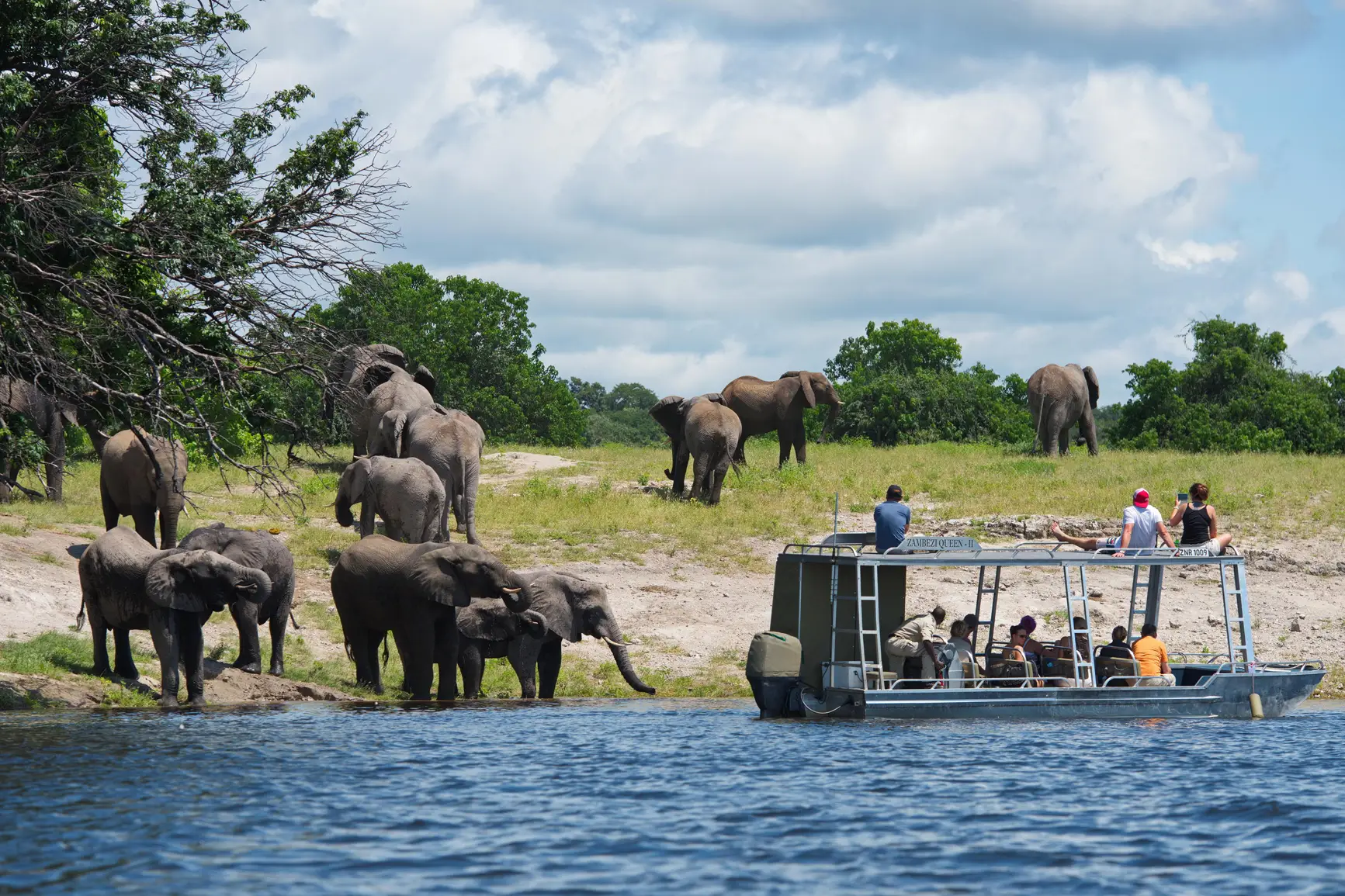
The Chobe River corridor supports one of Africa’s most extraordinary wildlife concentrations. Chobe National Park is home to an estimated 50,000–120,000 elephants — the largest single elephant population on the continent — and the dry-season riverfront gatherings are genuinely among the most dramatic wildlife spectacles on earth.
Common Sightings from the Vessel and Tender Boats
- African elephant — swimming herds, calves being guided across the current, massive breeding bulls at the water’s edge
- Hippopotamus — resident pods throughout the river, most active at dusk when they emerge to graze the banks
- Nile crocodile — among the largest recorded on the continent in the Chobe River system
- African buffalo — large herds in the dry season, often moving to the river in late afternoon
- Lion — Chobe Riverfront prides are well habituated and regularly sighted from both water and vehicle
- Leopard — less frequently seen than on land, but riverine forest sections do hold resident animals
- African wild dog — packs move through the riverfront area, particularly during the green season pupping months
- Puku antelope — a Chobe speciality; these medium-sized antelope are found in this river corridor but are absent from most other southern African reserves
- Bird life — African fish eagle, carmine bee-eater (in-season colonies are spectacular), giant kingfisher, African skimmer, open-billed stork and over 450 recorded species
It is worth noting that the Chobe River’s rhino population was historically depleted; the species is being reintroduced to protected areas in Botswana and sightings remain rare from the river. The Zambezi Queen experience is not a Big Five tick-list safari — it is a wildlife immersion focused on the river ecosystem, with elephants as the headline act.
What Activities Are Available on the Zambezi Queen?
The rhythm of each day aboard the Zambezi Queen is structured around the water — but the itinerary is intentionally flexible, and guests can engage as much or as little as they choose.
Guided Tender Boat Game Drives
Motorised tender boats take small groups into shallow channels and along the riverbank for close-range wildlife encounters. This is the vessel’s primary game-viewing activity — and often the most rewarding, as tenders can access shallow areas and slip quietly alongside elephant herds in a way the main vessel cannot.
Guided Birding Excursions
The Chobe River is a birder’s circuit of extraordinary depth. Dedicated birding trips by tender boat are available for guests who want to target specific species. Carmine bee-eater colonies (active roughly August–October) are among the most photographed subjects on the river.
Catch-and-Release Tiger Fishing
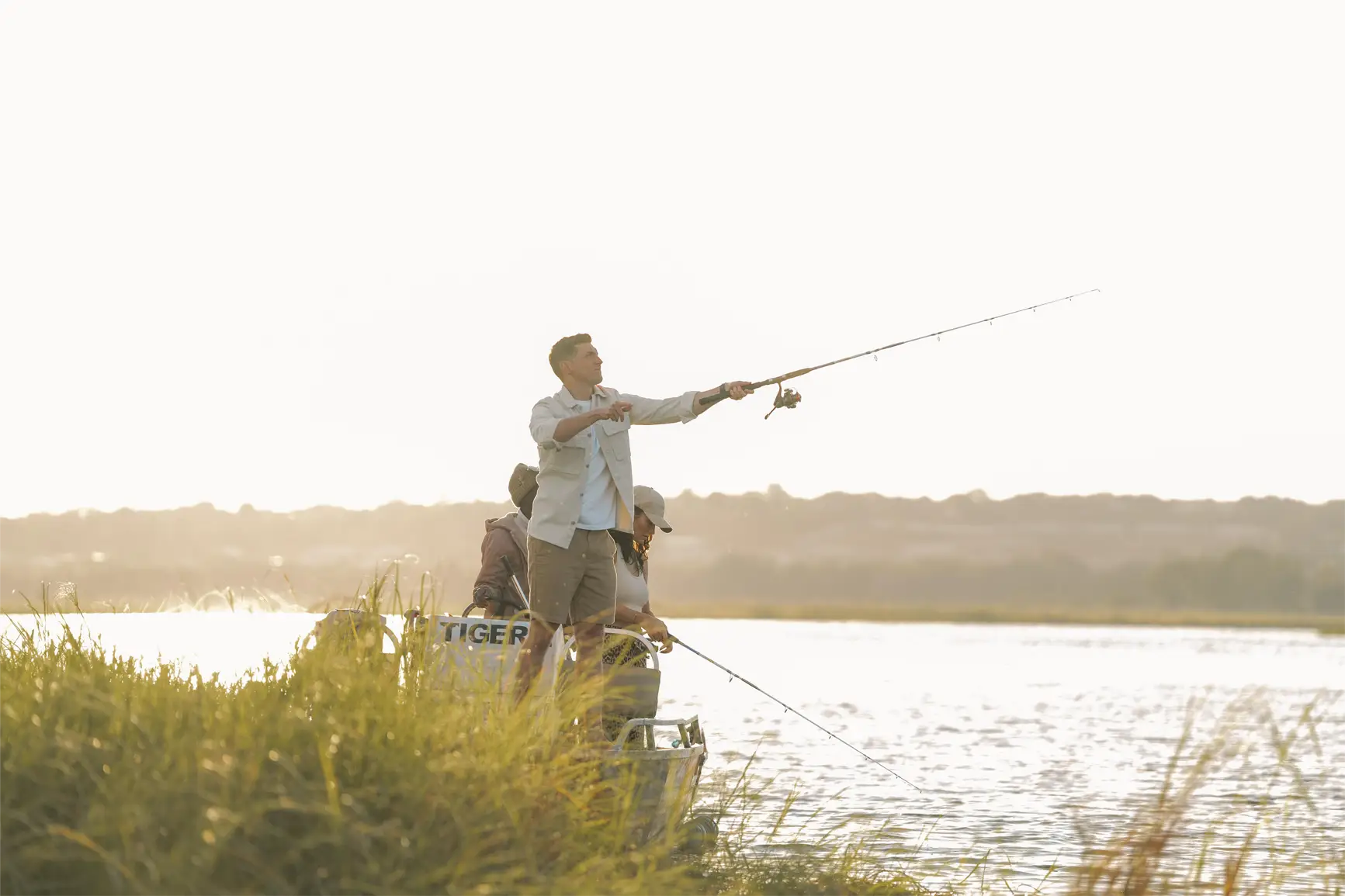
The Chobe River is one of southern Africa’s premier tigerfish destinations. Guided fishing trips by dedicated fishing boat are available, subject to availability. All fishing is catch-and-release — in keeping with the Zambezi Queen Collection’s conservation ethos.
Cultural Village Tour
A guided tour to a local Namibian community on the river’s edge provides context on how people in the Caprivi Strip live alongside — and depend on — this remarkable ecosystem. The tour covers traditional practices, community projects supported by the Zambezi Queen Collection’s conservation levy, and local craft opportunities.
Simply Being on the Water
Not every guest wants a packed itinerary. A meaningful portion of time aboard the Zambezi Queen is simply spent on deck — reading, photographing, watching game from the main observation areas or from a private balcony. For guests arriving from fast-paced itineraries, this unhurried rhythm is the point.
How Do You Get to the Zambezi Queen?
The Zambezi Queen boards from the Chobe River near Kasane, northern Botswana. Kasane is well connected by light aircraft and scheduled charter flights from Maun (the Okavango Delta gateway), Johannesburg, Victoria Falls and Livingstone.
The boarding process involves a short immigration crossing: guests arrive at Kasane International Airport, complete Botswana immigration, then take a road transfer to the Kasane Immigration Office and a boat transfer across to the Namibian side — the Zambezi Queen Collection handles all of this and it is included in the rate. Factor approximately 45–60 minutes for the immigration process.
Getting There — Key Connections
| Origin | Connection | Approximate Travel Time |
|---|---|---|
| Johannesburg (OR Tambo) | Direct charter/scheduled to Kasane | ~2 hours flying |
| Maun (Okavango) | Direct light aircraft | ~1 hour flying |
| Victoria Falls (ZW) | Road transfer or light aircraft | ~1.5 hrs by road; 20 min by air |
| Livingstone (ZM) | Road transfer or light aircraft | ~2 hrs by road |
The Chobe–Victoria Falls combination is among the most popular itineraries in southern Africa, and the Zambezi Queen slots naturally into a 7–10 day journey that might include 2–3 nights at Victoria Falls, a 3-night sailing, and an onward flight to Cape Town or the Okavango Delta.
Is the Zambezi Queen Good for Families?
The Zambezi Queen accepts children aged 13 years and older. This policy reflects both the vessel’s intimate scale and the nature of the experience — open-water crossings, early morning activities and a boutique atmosphere that suits older teenagers and adults. For families with children under 13, alternative Chobe-region land lodges or the Chobe Princesses (smaller vessels in the Zambezi Queen Collection, which may have different age policies) may be more suitable.
For families with older teenagers, the Zambezi Queen offers a genuinely memorable experience: the combination of elephant encounters at close range, active fishing, cultural tours and the novelty of sleeping on the water tends to land powerfully with younger travellers who might find conventional lodge safaris repetitive.
How Does the Zambezi Queen Compare to a Land Lodge?
This is the question most travellers ask — and the honest answer is that a river safari and a land safari are better treated as complementary than competing.
| Factor | Zambezi Queen (River) | Land Lodge (Chobe) |
|---|---|---|
| Primary activity | Boat-based game viewing | Vehicle game drives |
| Elephant access | Swimming herds, river crossings | Riverfront drives, bush encounters |
| Big cat viewing | Moderate (lion possible; leopard rare) | Higher probability |
| Night drives | Not available (immigration rules) | Available at private concessions |
| Walking safari | Not available | Available at select lodges |
| Sense of place | Unique — sleeping on the river | Classic bush camp or lodge |
| Flexibility | Scheduled departures; fixed itinerary | Highly flexible |
| Ideal for | Photographers, birders, repeat Africa travellers | First-time Big Five seekers |
The most seasoned Africa travellers consistently rate the Zambezi Queen as a different experience — not a lesser one. If you have done multiple land-based safaris and want to see Africa from a genuinely new vantage point, the river is compelling. If this is your first sub-Saharan safari, combining one night or two at a land lodge with a Zambezi Queen sailing gives you both worlds.
Frequently Asked Questions About the Zambezi Queen
How many people does the Zambezi Queen hold?
The Zambezi Queen has 14 suites — 10 standard suites and 4 luxury suites — and accommodates a maximum of approximately 25 guests per sailing (when the full complement of rooms is booked, factoring in triple configurations and single occupancy limits). The vessel can also be booked for exclusive use for private groups of up to 25 guests.
What is the Zambezi Queen’s guest-to-staff ratio?
The Zambezi Queen operates with an exceptional guest-to-crew ratio of 3:2 — that is, for every three guests, there are approximately two crew members. This is unusually high even by African luxury safari standards and results in a level of personalised service that guests consistently single out in reviews.
Are Zambezi Queen rates all-inclusive?
Yes. The rate covers accommodation, all meals, non-premium beverages (soft drinks, local beer, wine, non-premium spirits), guided water-based game viewing, birding, catch-and-release fishing, a cultural village tour, and airport-to-vessel transfers. Not included are premium alcohol, the conservation levy (ZAR 250–270 per person per night), gratuities and air tickets.
What is the difference between a Suite and a Luxury Suite on the Zambezi Queen?
Luxury Suites are located at the bow of the vessel and are slightly larger (~165 sq ft / 15.3 m² vs ~155 sq ft / 14.4 m²). Each Luxury Suite has two private balconies — one furnished with deckchairs for extended outdoor relaxing — and commands uninterrupted panoramic forward views. Standard Suites have one private front-facing balcony. Both categories face outward over the river with no interior-facing rooms.
What is the best season to sail the Zambezi Queen?
The dry season (May–October) delivers the most dramatic wildlife — tens of thousands of elephants converge on the Chobe Riverfront as surface water recedes. June, July and August offer the clearest skies and largest herds. September and October add excellent birding as migrants arrive. The green season (November–April) offers lower rates, lush landscapes, exceptional birding and a quieter experience — two-night sailings are available in January, February and December.
Can children sail on the Zambezi Queen?
Children aged 13 years and older are welcome on the Zambezi Queen. The minimum age policy reflects the vessel’s intimate design and the nature of open-water activities. Families with children under 13 should enquire about the smaller Chobe Princesses or land-based options in the Chobe area.
Is the Zambezi Queen the same as the Chobe Princesses?
They are sister vessels under the Zambezi Queen Collection by Mantis. The Zambezi Queen is the flagship — larger (42 metres), with 14 suites and more onboard amenities. The three Chobe Princesses are smaller, more intimate vessels for guests who prefer an even more exclusive, private experience with fewer fellow travellers. Both operate on the Chobe River from the Namibian side.
How far in advance should I book the Zambezi Queen?
Demand for the Zambezi Queen — particularly three-night dry-season Friday sailings — is high. The operator notes availability is limited to selected departures. Booking 6–12 months in advance is strongly recommended for peak season travel (June–September). Shoulder months (April–May, October–November) allow shorter lead times, though popular dates still fill quickly.
Plan Your Zambezi Queen Safari
The Zambezi Queen is one of the most distinctive safari experiences in southern Africa — a 42-metre floating boutique hotel positioned at Africa’s largest elephant gathering, combining the intimacy of a private yacht with the wildlife access of a Botswana game reserve. Whether you are planning a standalone river safari or incorporating the Zambezi Queen into a broader Botswana and Zimbabwe itinerary, the logistics of immigration crossings, departure scheduling and seasonal timing benefit from expert arrangement. African Safari Group, a specialist luxury safari operator, can arrange bespoke itineraries combining the Zambezi Queen with Chobe land camps, Victoria Falls, the Okavango Delta and beyond. Enquire now to discuss availability and tailor a Chobe River safari to your travel dates.